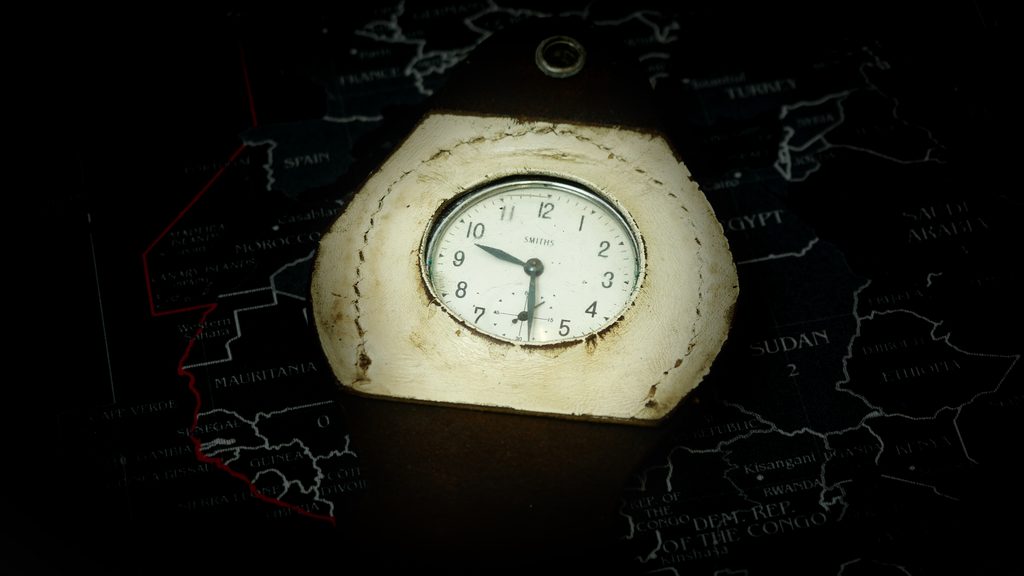
There is an old pocket watch in my house that I rarely use.
It sits inside a worn leather case. Every now and then I take it out, hold it in my hand, and remember that it once belonged to my father.
Objectively, it isn’t particularly useful to me. I don’t carry a pocket watch. My phone tells the time rather more accurately, and unlike the watch, it doesn’t need winding.
And yet I wouldn’t dream of getting rid of it.
There are things of my father’s that mean more to me now than they probably ever could have while he was alive.
I’ve been wondering why.
Perhaps it is because, somewhere along the way, objects stop being merely objects.
They accumulate stories.
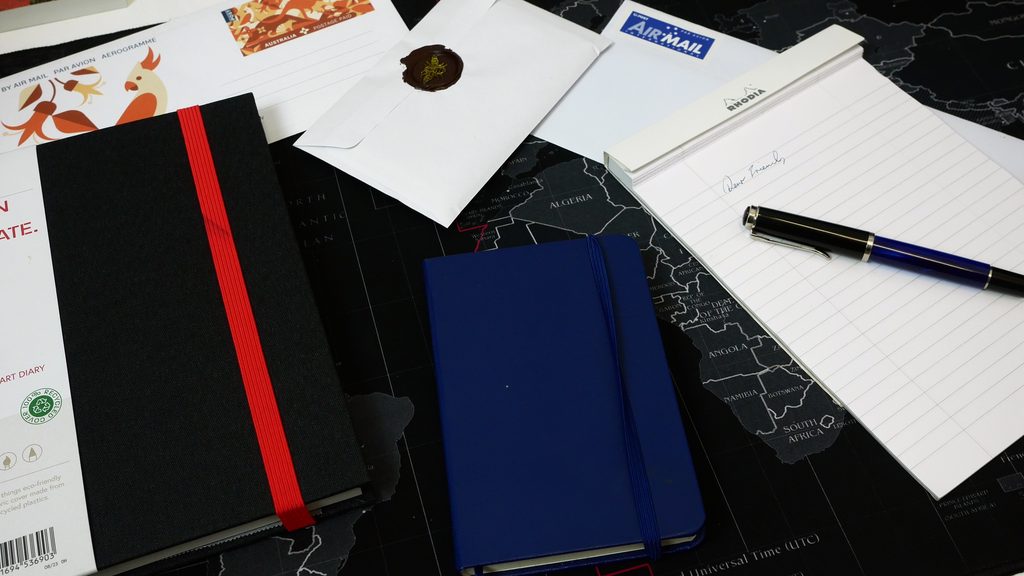
A watch becomes the watch my father carried. A photograph becomes an afternoon I don’t want to forget. A handwritten letter becomes a person sitting thousands of kilometres away, taking the time to put pen to paper.
Their monetary value becomes almost irrelevant.
What matters is what we’ve attached to them.
Ordinary things
I have quite a few things like this.
Not necessarily valuable things. In fact, many of them would probably mean very little to anyone else.
There are photographs, letters and notebooks. Old tickets. Small mementos from days that mattered to me. Things I’ve made. Things other people have given me.
Sometimes their significance is obvious from the beginning.
Other times, an entirely ordinary object quietly becomes important without us noticing.
Perhaps that’s why I’ve become increasingly interested in making physical things.
For most of my life, photography has existed somewhere between the physical and digital worlds. I make photographs using a digital camera. I edit them on a computer. I share some of them online.
But something changes when I print one.
I can hold it.
I can put it in a book. Give it to someone. Find it again years later tucked somewhere I’d forgotten about.
The photograph hasn’t changed.
But somehow my relationship with it has.
The marks we leave behind
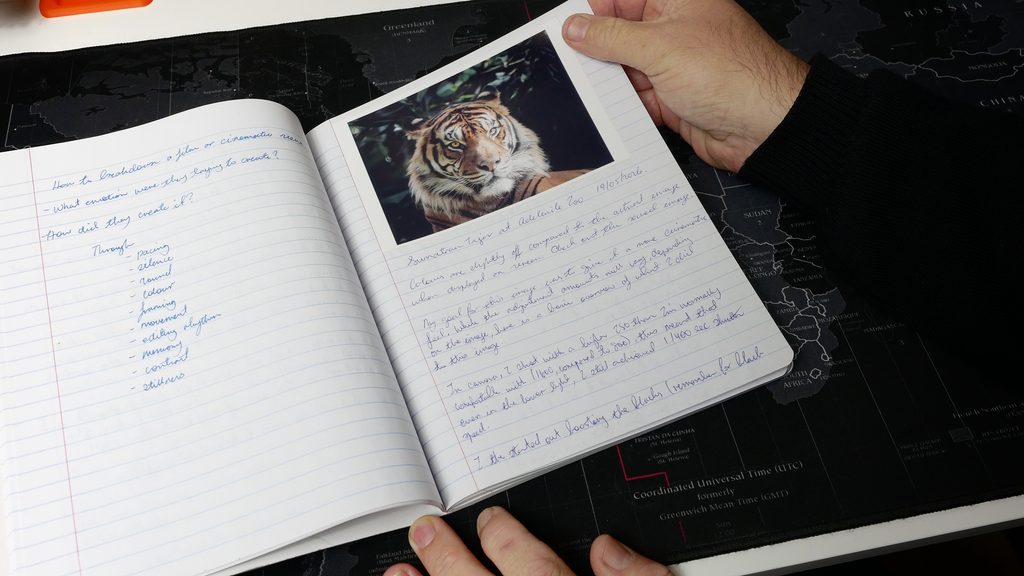
I’ve noticed the same thing with notebooks.
My notebooks aren’t pristine.
There are crossed-out words, hurried observations, wonky sketches and ideas that seemed brilliant at the time and considerably less brilliant when I read them again later.
Some pages are carefully considered.
Others are a mess.
But perhaps that’s what makes them mine.
A digital document can be corrected endlessly until every trace of its creation has disappeared. A handwritten page tends to keep the evidence.
The change of pen.
The different handwriting when I was in a hurry.
The coffee stain.
The sentence that went somewhere unexpected.
The little drawing squeezed into a space that wasn’t really large enough for it.
They are imperfections, certainly.
But they’re also fingerprints.
Letters have much the same quality.
There is something wonderfully inefficient about sitting down with a piece of paper and writing to another person. You can’t instantly undo a sentence. You can’t change the font or rearrange the paragraphs once you’ve written them.
You simply continue.
And when that letter eventually reaches somebody else, they aren’t merely holding the words you wrote.
They’re holding the piece of paper that was sitting in front of you when you wrote them.
I think that matters.
We can’t keep everything
Of course, there is another side to all of this.
We cannot keep everything.
Nor, I suspect, should we.
If every object becomes precious simply because it once belonged to us, eventually the things that genuinely matter become lost amongst everything else.
So perhaps intentionality matters here too.
The question isn’t simply:
Should I keep this?
Perhaps a better question is:
What am I actually trying to preserve?
Sometimes the answer really is the object.
I don’t want a photograph of Dad’s pocket watch instead of the watch itself. I want the little leather case. I want to feel its weight in my hand. I want to wind it and hear the mechanism begin moving again.
Tick.
Tick.
Tick.
But other times, perhaps the object has already done its job.
The memory remains even if the thing itself doesn’t.
Learning the difference is probably something I’ll spend the rest of my life figuring out.
Making things for people we haven’t met yet
Lately I’ve also been thinking about this from the opposite direction.
Not just about the things I’ve inherited or kept from my past, but about the things I’m making now.
Photographs.
Journals.
Letters.
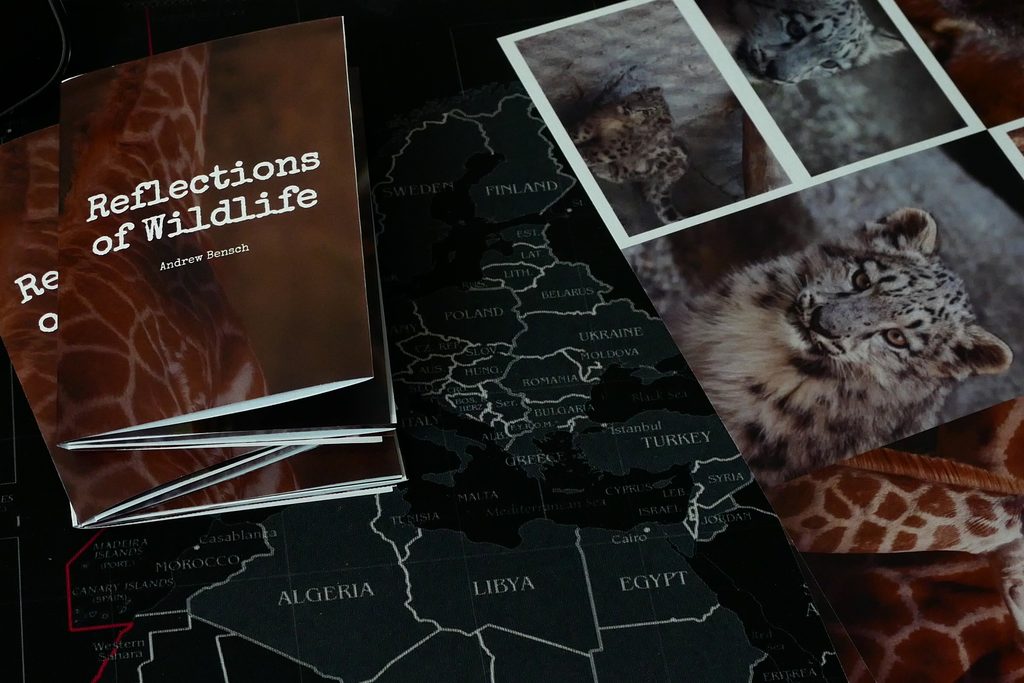
Little printed zines.
Even these words.
At the moment, they are simply part of my life.
But I wonder what they might become with time.
Perhaps years from now I’ll open one of my old notebooks and meet a version of myself I’d almost forgotten.
Perhaps somebody else will find one of my photographs and know something about the way I saw the world.
Perhaps a letter will survive long after the conversation that inspired it has faded from memory.
That’s a strange and rather beautiful thought.
We spend so much time thinking about making things for an audience that exists now.
Perhaps occasionally we are also making things for people we haven’t met yet.
Including our future selves.
The stories we don’t want to lose
I wound Dad’s watch again recently.
It had been years since I’d done it.
For a little while I simply sat with it and listened.
Tick.
Tick.
Tick.
It’s such a small sound.
And such an ordinary object.
But of course, it isn’t really an ordinary object anymore.
Because when I hold that watch, I’m not thinking about gears or springs or what somebody might pay for it.
I’m thinking about Dad.
And perhaps that’s ultimately why we keep things.
Not because we’re frightened of letting go.
Not because the things themselves are necessarily valuable.
But because sometimes an ordinary object becomes a place where a story lives.
A photograph.
A notebook.
A letter.
An old watch in a leather case.
Little containers for people, places and moments that mattered to us.
We know we can’t keep everything.
But every now and then, we find something that quietly says:
Keep this.
This one matters.
And so we do.
This reflection also became a short film, recorded in my library over a pot of tea.
“Why We Keep Things” can be watched below.
Enjoyed this reflection?
If you’d like to stay connected, you’re welcome to receive occasional letters and updates from my Journal. No constant stream of emails, just something worth sharing.